• Home
  • Schedule
  • About Sōl
    • Class Descriptions
    • Membership Info
    • Sustainability Partners
  • Student Access
  • New to Sōl?
    • Start Here
    • Learn Even More
  • Events & Trainings
    • Events
    • Teacher Training
  • Blog
  • Instructors
  • Contact
  • Menu

Sol Yoga Collective

yoga to the people.
  • Home
  • Schedule
  • About Sōl
    • Class Descriptions
    • Membership Info
    • Sustainability Partners
  • Student Access
  • New to Sōl?
    • Start Here
    • Learn Even More
  • Events & Trainings
    • Events
    • Teacher Training
  • Blog
  • Instructors
  • Contact

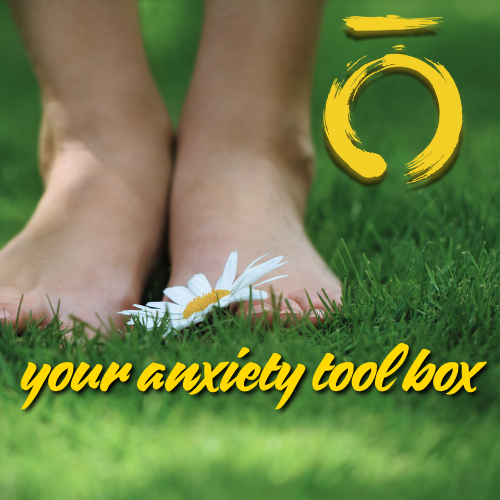
Your Personal Anxiety Tool Box

July 03, 2024

It’s hard to imagine anyone living on Planet Earth who has not experienced anxiety at some time in their life. These days, many of us deal with cyclical and chronic anxiety. Whenever we feel afraid or anxious, our body releases the hormone cortisol, a key chemical in our flight-or-fight responses. Many years ago, our ancestors felt fear because their lives were threatened. Today, we don’t need to be in physical peril in order to feel the same terror, anxiety, and stress. That’s because our response to stress is biological, and even just feeling or thinking about our fears can trigger the release of cortisol.

Cortisol increases the sugar (or glucose) in our bloodstream. It also suppresses the digestive system, the reproductive system, and the body’s growth processes. That makes a certain amount of sense – if your life were in danger, you would need to shift into survival mode. But today, living in a constant or consistent state of stress can result in those same suppressions. Suppressing the digestive system can cause you to overeat and to store fat even if exercising regularly. Suppressing the reproductive system can alter your cycles and hinder conception.

But we cannot just tell ourselves not to feel anxious or afraid. It’s important for each of us to develop a toolbox of techniques that help us to face our fears, and diminish our stresses. This toolbox will be different for each of us and that alone can be an intimidating thought. We want to turn to professionals, to tell us what to do. We’re actually afraid of building our own toolboxes because we trust other people more than we trust ourselves.

But only you can fully understand what your triggers are, how you are likely to react, what your desired outcomes are, and what the best techniques will be to get you through each panic or stress attack. So let’s talk about how to build your own personal Toolbox – one that really works for you. This is a chance to be really intentional about finding solutions to your anxiety.

The first thing is to recognize what your triggers are. We suggest spending the first moments of savasana in your yoga practice to pay attention to your body and your emotions before drifting. This is great for any yoga class that winds you down, particularly our Yin Yoga class. Find something that offers you clarity in those moments leading into savasana, and add that to your Tool Box.

Some people might find anxiety kicking in after their energy has increased. You might feel really recharged after Warm Flow, only to experience a dopamine crash an hour or more later. You might need to stock your personal Tool Box with something grounding after Warm Flow. How about stepping outside, taking off your shoes, and just letting your toes sink into the grass for a few minutes, while (of course) hydrating?

If you’re in our Balanced Yogi class, which includes a lot of work on your core and spine, you might find your abdomen a bit sensitive or even experience some mid-back soreness. Your Tool Box might include some ginger tea, or a monthly massage.

We find that anxiety and stress is often lessened by knowing what to expect in the days ahead. While nobody has a crystal ball, we do know our schedules and what might occur based on the season, our work and social schedules, and our responsibilities. Go into your calendar and pencil in everything that you want to look forward to – not just the things you have to do. Add your favorite yoga classes, your date night with friends and loved ones, and that all-important ME time that you need to reconnect and remember that you have everything you need to face your fears, and the strength to overcome them.

Comment

Heart Chakra

June 18, 2024

Our Fourth Chakra (Anahata) is known as the Heart Chakra. It is located in your chest and associated with our emotions. That includes our feelings of contentment and connectedness with others, our joy and compassion, our ability to love others and ourselves as well as to receive love, our capacity to forgive, and our passion and purpose in this life. The color associated with the Heart Chakra is green.

Anahata is sometimes known as the dwelling place of the soul. When our Heart Chakra is out of balance, we may experience problems with relationships and intimacy, with setting (and respecting) boundaries, and to become withdrawn.

A weakened Heart Chakra can also affect the heart, lungs and upper spine – manifesting as posture problems. So yoga is an excellent way to open the front body, increase the flow of oxygen around the heart, and strengthen our Anahata.

Here are some poses we recommend:

Cat/Cow (mariaryasana bitilasana): Cat/Cow is one of the best for opening the heart and moving negative energy (anxiety, stress, grief) away from the center of your being. Start in tabletop pose on hands and knees. Place your wrists directly under your shoulders and your knees below your hips. Press your hands into the ground, while rounding your back gently. Gaze down until you feel a stretch at mid-spine, behind your heart. Hold this position for a few breaths, then arch your back and look upward, to open the front of your heart. Switch between these poses, paying attention to how they make you feel both physically and emotionally.

Upward Facing Dog (urdhya mukha svanasana): Another frequent position in yoga, Upward Facing Dog can open and energize your Heart Chakra. Start on hands and knees with hands directly below your shoulders and knees below your hips. Then stretch your legs out straight behind you, while lowering your hips. Keep your head and neck straight, in line with your spine. Continue until you feel a gentle stretch in your abdomen and chest, and once you reach the top of the pose, hold for several breaths. Repeat until you release any stiffness or tension in the body.

Dancer’s Pose (natarajasana) : While not as common as Upward Facing Dog or Cat/Cow, this is also an excellent way to open the Heart Chakra while strengthening the muscles of your legs and lower body. Start by standing upright, with feet together and arms at your sides. Then bend your right knee, and grab hold of your right foot with your right hand. Gently tilt your torso forward, while kicking into your hand. If balance is an issue, we recommend using a strap. Repeat on the left side, paying attention to which side gives you greater balance.

The Heart Chakra can also be strengthened with mindful practices including prayer, meditation, breathwork, and gratitude. We love your heart and you should too!

Comment

We Are Not Our Thoughts

June 01, 2024

Have you ever had a moment on the mat when the class, the room, your own body, and even your thoughts just disappeared? When you caught yourself just feeling and being?

There are many states of consciousness and thanks to the ancient language of Sanskrit which is so deeply connected to yoga, we often have names for them. You’ve heard of Nirvana of course, and probably of Bodhi. But there’s a state of consciousness we want to highlight here that is a common occurrence in the experience of yoga: Samadhi.

Samadhi is a state of pure consciousness that leads to a feeling of oneness. When we say consciousness here we don’t mean overwhelmed with thought but rather awareness as opposed to thought. In Samadhi we find ourselves in total awareness. It’s like observation without contemplation, if that makes sense.

Samadhi is associated often with ashtanga yoga, and sometimes results in a feeling of euphoria or bliss. Samadhi occurs after we move through the earlier stages of consciousness that are focused on external control: controlling our movements, our physical selves, our body. We can achieve that kind of physical control through the experience of yoga, pushing our physical selves past the point of resistance. It is once we reach that physical control that we are able to move into control of our internal self. We stop the turning wheel of thoughts and we reach the point where we recognize (or are aware without thought) that we are actually one with the universe.

It takes a very dedicated practice to be able to control both the external and the internal, but yoga and meditation are excellent ways to begin. It also helps to use a mantra (like OM) because they train the brain to shut out the sensory intake around you, quiet the ‘clutter’ of ideas and thoughts, and detach the ego until all that is left is consciousness. That is Samadhi. The experience of understanding that we are not only not just our physical selves, but that WE are separate from our thoughts.

Now, you won’t remain in Samadhi – it is a brief and blissful experience that evaporates once those thoughts start wiggling their way in. But even a few seconds of Samadhi will linger throughout your day, leaving you with a sense of stillness and clarity. Your senses will remain heightened, and you’ll feel more deeply connected with your life. Many people also report increased concentration throughout the day. And of course, the feeling of peace and purpose that can only deepen your spiritual experiences, and more deeply connect you to the joy of your yoga and mindful meditation experience.

Comment

Solar Plexus Chakra

May 19, 2024

As we move through the chakras, we reach Manipura – our solar plexus chakra.

The solar plexus sits above your navel, and is home to a network of sympathetic nerves in your abdomen. The solar plexus is historically associated with the sun, and when we open our solar plexus chakra we are able to absorb sunlight to increase our energy.

Manipura is all about our personal power – the word translates to ‘city of jewels’ and is deeply connected to the element of fire. The color associated is a bold yellow, Your solar plexus serves to ignite your own personal fire and to unleash your potential and power. The words confidence, strength and determination are linked to your solar plexus chakra and it is our center of vitality. It’s also connected with our digestive system and our core and balance.

Because of the digestive connection, eating a balanced and nutrient-rich diet is very important to our solar plexus chakra and the strength and good health we can achieve when that chakra is engaged and active. And it’s actually recommended to eat a lot of yellow foods – fruits like bananas, pineapple, lemon and mango, vegetables like corn and yellow peppers, as well as seeds and spices that are yellow (like sunflower seeds and turmeric and ginger).

But there are also yoga positions that can help strengthen your solar plexus chakra and core. They include:

Seated Twist (ardha matsyendrasana) – This is particularly good for strengthening your lower back and core, as well as relieving pressure from digestive issues. This seated position is sometimes known as ‘Half Lord of the Fishes’ and combines both a gentle twist as well as a hip opener.

Cobra Pose (bhujangasana) – This heart-opening backbend helps lead into more assertive backbends, while strengthening your core and your shoulders. This is a particularly great pose for anyone needing to improve their posture.

Plank (phalakasana) – Plank improves your foundation, while strengthening  your arm and shoulder muscles. This is all about achieving balance and self-control, greatly enhancing your resilience on the mat and beyond.

Upward-Facing Dog (urdhya mukha svanasana) – Upward-Facing Dog is generally part of Sun Salutations, and transitional in nature. But this pose is also wonderful for strengthening your spine, posture and alignment. Anyone with a traditional desk job will greatly benefit from a regular Upward-Facing Dog yoga practice. But it’s also fantastic at enhancing the inner strength and confidence that we all need.

Your solar plexus is much more than just a belly button. It is your core, your strength, and your sense of personal power. Open that solar plexus chakra to release unnecessary fears, and let the light in!

Comment

Understanding Ahimsa

April 26, 2024

Mahatma Gandhi once said, “Nonviolence is our greatest walk of life.” Most of us recognize violence and harm when we see it manifested physically – a bully tormenting someone vulnerable, an angered driver speeding erratically in traffic, news footage of a criminal breaking into someone’s home. But do you recognize violence in your thoughts?

The human mind, body and spirit do not actually recognize the difference between thinking harmful thoughts and acting upon them. Thus, many people often experience a ripple effect of guilt over their thoughts even if they never raised their hand to strike someone.

The term Ahimsa, which translated from Sanskrit simply means ‘absence of injury’ is a core tenet of yoga and dates back to the ancient wisdom of the Vedas nearly four thousand years ago. Ahimsa is a practice of self-regulation intended to free us from our own human impulses, particularly those that are harming. It’s an exercise in consciousness and liberation. Can we recognize violence and harm beyond that which is physically manifested?

Ahimsa is not an easy practice to maintain. It calls us to look closely at our own words, behaviors and thoughts as well as the more subtle actions of others. If your neighbor abused their pet dog, you would not hesitate to report them to animal control but if your father spoke unkindly to your mother or sibling year after year, would you take action? If you participate in gossip, do you recognize this also as a form of abuse? That just because it doesn’t involve a weapon does not make it any less harmful to our victims and to ourselves?

If we tell others that we are nonviolent but we do not speak up about the violence we witness, does that not strike you as hypocrisy? And if we are constantly thinking ill thoughts about others, don’t we put ourselves into a cycle where we are constantly fearful of what others are thinking about us?

Yoga, meditation, breathwork and mindfulness give us the space to look carefully at our actions, our words, our thoughts and what we witness from others including the actions that we internalize. Empathy doesn’t just extend to our fellow humans – we must show empathy to ourselves as well but that often means holding ourselves to a higher level of awareness and responsibility. The act of nonviolence begins within ourselves – by living a life of kindness and compassion toward everyone we encounter. Including ourselves.

What does Ahimsa mean to you?

Comment

Deep Healing in our Sacred Sacral Chakra

April 13, 2024

Chakra is a Sanskrit word, meaning wheel and it refers to the body’s energy centers. Each chakra is associated with particular experiences and emotions. The second chakra (svadhisthana) is known as the Sacral Chakra. It is located at our lower abdomen and hips. Svadhisthana is the relationship chakra – it represents our relationship with those closest to us, and even to ourselves.

Our Sacral chakra is associated with creativity, with sensuality and pleasure, and also with the element of water. The Sacral Chakra is often associated with our childhood experiences, with trauma at early ages, and with sex and reproduction.

Yoga, meditation and self-care can help us reconnect to, and re-energize our sacral chakra. If you feel there is deep healing you must do in order to have healthy relationships with yourself and others, here are some excellent poses that we recommend:

Goddess Pose utkata konasana: Stand with feet wide apart and bend your knees, bringing your thighs parallel to the floor. Make sure your feet are outward facing, while your shoulders are parallel to your hips and your back straight. Put your palms together in front of your heart and keep your eyes focused ahead. This is a great position for finding balance while opening your sacral chakra.

Pigeon Pose kapotasana: This is a wonderful position to ease tension around your pelvis while strengthening your back muscles. Start on hands and knees (Bridge Pose) and bring  your right knee forward and then sit on it, stretching your left leg behind you. Then rotate your right knee to position your foot by your hip. Slowly and gently move your hips down to the ground by kicking the left knee back. Be sure to keep your left leg flat on the ground, and place your palms on the floor on either side of you. Set your shoulders back, and open your chest.

Happy Baby ananda balasana: This pose is not just great for opening and strengthening pelvis and sacral chakra, but for bringing healing and restoration. Start on your back and bring your knees to your chest, then reach behind your calves and pull up while holding either the soles of your feet or your ankles. Then hold this position for five to ten breaths, release, and repeat. If you are comfortable with it, gently rock from side to side, feeling that all-over body hug that reminds you that you always have the power to heal and protect yourself.

Feeling safe in our bodies, and empowered by our own healing touch is vital. We are blessed that Yoga shows us that we are always whole and striving to be our most peaceful, powerful selves.

Comment

With Roots Like A Tree

March 24, 2024

Chakra is a Sanskrit word, meaning wheel and it refers to the body’s energy centers. Each chakra is associated with particular experiences and emotions. The first chakra (muladara) is known as the Root Chakra. It starts at the base of the spine, the first three vertebrae and pelvic floor. It extends all the way through our legs, into the soles of our feet, and even a few inches into the ground, reflecting that we are connected to Mother Earth like the roots of a tree.

The root chakra is associated with feeling rooted in our lives, secure in the world, and having a strong foundation. When we have foundational security, we tend to thrive in our environment and feel deeply connected to our lives and the choices we make.

Yoga can help us reconnect to, and re-energize our root chakra. Reiki and meditation are other practices that can help us to develop a stronger chakra system, and even western practitioners such as chiropractors are beginning to understand the importance of the energy centers of the body in finding wellness and wholeness.

If you have been feeling restless, rootless, adrift, or disconnected, here are some excellent yoga poses that we recommend:

Child’s Pose balasana: Start in Table Pose, then lower your hips to your heels, and gently rest your forehead on the ground. Your knees can be apart, or together, depending on your comfort level. Your arms can be overhead or beneath your forehead or even beside the body. As you breathe deeply, press your abdomen against your thighs. To release, gently inhale up to Table Pose again.

Lotus Pose padmasana: This is what we know as crossed-leg pose, perhaps the most common seated position in yoga. We start seated with legs extended and spine straight, then bend our right knee and hug it to the chest, then tuck the ankle into the left hip. The top of the right foot will rest in the hip joint. Then bend your left knee and cross it over, to tuck the ankle into your right hip. Press your hips gently into the floor, and raise your spine. You may also place your hands on your knees, to keep them from lifting. This is a very calming and centering position, with oxygen moving throughout the body including around the spine.

Tree Pose virksasana: If you really want to engage your core and strengthen your balance, Tree Pose is not just advantageous to the body, but to the mind and spirit as well.

While standing in Tadasana (feet together, legs straight and knees unlocked, elbows at waist and arms extended slightly from the body), spread your toes and gently lift your lower belly. Inhale, lift your chest, exhale and pull your shoulder blades down. Pick a steady focal point ahead, place your hands on your hips, then raise your right foot and place it against your left thigh or shin. Keep you hips square and if you are feeling confident in your balance, place your hands at your heart or stretch your arms upward (like a Tree!)

Warrior Pose virabhadrasana: Begin in Downward Facing Dog, then step your right foot forward to bring your toes parallel to your fingertips. Then bend your knee by 90 degrees, bringing your thigh parallel to the floor with your knee directly over your ankle. Rotate your left heel by 45-degrees for balance. As you inhale, raise your arms at shoulder distance apart and lower your tailbone. This is a great pose for finding balance, and discovering your strength.

Finding our balance, our strength, and our place in the world is important. We are blessed that Yoga teaches us to reconnects to our own power, and allows for self-healing and self-awareness.

Comment

Let’s Talk About Sex and Yoga

March 01, 2024

If you want to put your passion into overdrive, we have great news about yoga.

Let’s be frank: yoga just feels good! Physically, emotionally, spiritually – we feel better about every part of our life when we regularly express ourselves through yoga, breathwork, meditation.

We already know that yoga is hugely beneficial to our health and immune systems, to our sense of well-being and connectedness, but did you know that yoga is a great way to improve your sex life and libido?

We’re not just talking about the feel-good sensations that come with yoga. That’s called COREGASM and while it’s a very real thing, helping us to feel restored and pleasured and vibrant, we’re actually talking about tangible benefits that yoga can add to sex and self pleasure.

It’s even scientifically proven! The Journal of Sexual Medicine found through studies that yoga improves sexual function in women, particularly those above age 45, and a separate study in New Delhi for men had participants reporting a significant improvement in sexual function for them as well!

Whether your intimacy involves a partner or not, sexual function, performance and pleasure can all be greatly improved through yoga.

For women in the Journal of Sexual Medicine study, up to 75 percent of participants reported a significant improvement in desire, arousal, lubrication, satisfaction, and even orgasm. For men in the study in New Delhi, they found that desire, satisfaction, confidence, erection and orgasm had improved as well.

Do you need further convincing?

How about the fact that those same researchers in New Delhi found that yoga is an excellent alternative to Prozac and other treatments for men?

So why does it work? Yoga regulates our parasympathetic nervous system, which tells the body how to relax and relaxation can be key to peak sexual satisfaction. Plus, women who regularly do yoga tend to be more aware of their physical body and the ways that it achieves pleasure. Of course, yoga also improves physical stamina, blood pressure, and flexibility.

Plus, there is the kundalini effect with yoga – the movement of energy up and down the spine and the release of blocked energy in our chakra system. And if you have ever worked your Kegel muscles, in yoga you’ll also find Moola Banda which provides a similar contraction in the pelvic region.

Yoga can help with lubrication, with blood pressure, and with body image and acceptance. All of these can be so beneficial for anyone’s sexuality, passion and pleasure. We all deserve a little more passion and pleasure this season!

Comment

What Do You Most Love?

February 21, 2024

If the first answer to that question isn’t “my life” then Sōl Yoga Collective has a challenge for you:

Loving our lives means accepting who we are, what we have accomplished, and feeling passionate about the journey we are on. We happen to think you’re pretty darn loveable, and we want you to be absolutely in love with your life.

Now you’ll notice that we didn’t ask the question “what PART of you do you most love?” That question often encourages thoughts of the parts that we DON’T love the most about ourselves, splitting us between the ‘good’ and ‘not so good’ parts of our body and self. We don’t want you to judge who you are, we want you to LOVE all of you and we have a suggestion for how to do that:

Meditation. We challenge you to get on your mat every day for the next two weeks, to do at least 15 minutes daily of yoga, and to finish in lotus position, in meditation, and in pursuit of loving yourself fully. If prayer is asking for guidance, meditation is listening fully. It allows us to receive, in answer to our prayers. So every day after yoga, sit in silence and stillness. Feel all the parts of your body, and all the emotions that flow through you. Think of yourself as the whole package, and find joy and passion in the fullness of who you are and who you are becoming.

Yoga and meditation are partners in the pursuit of passion. Yoga brings blood throughout the body, helps improve your immune system, strengthens your core, restores your breath, enhances your digestive system, brings you into harmony with better health, tests your limits, and lights a fire within your being. Meditation allows you to absorb the full experience of yoga, to take in all the benefits of yoga and offers a clarity to find solutions.

Yoga and meditation together gives you the space to think about your passions and the fuel to carry them forward. What have you always wanted to do?

For some of you, the answer simply was to have a regular yoga practice, to move your body in a healthy way, and to feel more alive in the space you inhabit.

For others, your dreams expand far beyond your yoga mat and yet, that time on your mat can be highly encouraging in helping you find your passion and fulfill it.

Feeling passionate about your life starts with really feeling all of your life – the highs and lows and in-betweens. Physically, mentally, emotionally, and spiritually – take stock in who you are and feel the love. Let it fuel you and flow over you.

So tell us, what is it that is currently lighting your fire?!

Comment

Yoga and Conflict Resolution

January 28, 2024

Valentine’s Day may be coming up soon, but relationships are not always love and roses. Most relationships will face conflicts and challenges. We can’t always avoid conflict. Being a good partner, friend, neighbor, colleague, means facing those conflicts and finding solutions.

Sometimes it feels as though we have been harmed by someone without bearing any responsibility. However there is usually another side to the story. Being honest about the role we play in conflicts with others is important for our growth. But facing our feelings is also key to developing the language to confront those we have to have those tough conversations with.

When someone has upset you, you have an opportunity to approach that person and communicate. Tell them how their actions made you feel, and ask them to respond. Some people cannot help but lash out in response – to point out your flaws. When that happens, try not to be rattled or go on the defensive. Listen to them, and politely respond by saying that you would be happy to talk about that at a later time and could we return to the issue you raised?

Brushing things under the rug can potentially only cause us more stress or harm. But there has to be a responsible and respectful approach to having those hard conversations. Tell the person that you are committed to repairing the relationship, if that is your intent. And if peace cannot be made, say thank you to the other person for the role they have played in your life and walk away. Most relationships are worth the hard work but there are exceptions.

One great benefit of yoga is that it builds self-awareness and emotional intelligence. We are given opportunities throughout our practice to listen, respond, and react. It may be to our yoga instructor, to the others sharing space with us, to the environment around us, or even our own physical and emotional responses. You make a commitment when you step onto your mat, to do your best. Doing your best means experiencing all of it – the joy, the discomfort, the awkwardness, and the ultimate benefit. The same is true of all our relationships. They ask us to change.

It's when we are asked to change in ways that do not benefit us and others that give us good reason to pause, reflect, and find another way.

How do you handle conflict resolution and how can yoga help you be a better communicator?

Comment

Yoga for Digestion

January 14, 2024

Now that the holidays are over and we have indulged (and overindulged) you might be feeling a wee bit bloated. Not to fear, there’s always time to make healthier choices especially when you’re not being tempted by Christmas cookies, and nog, and Chinese food, and champagne, and we go on.

Here are some ways that Yoga can help aid with digestion and feeling more comfortable in your body post-holiday season.

General yoga info: Yoga reduces stress, a trigger for digestive issues. Yoga encourages relaxation, which aids in good digestion. Plus, pranayama (yogic breathing) and meditation work in tandem to relieve anxiety and improve all of the body’s functions. Plus, yoga postures actually stimulate the muscles and organs that help with digestion and elimination. They actually help massage your stomach and intestines, and bring increased blood flow to the entire digestive system. This helps reduce inflammation and bloating, and allows everything to work as intended.

Additionally, a healthy yoga lifestyle encourages good hydration and nutrition, diet and restful sleep, all of which contribute to happy bodies and tummies.

Now, let’s talk about some specific positions that can really help those dealing with those post-holiday digestive woes:

It doesn’t get more Yoga 101 than Downward Facing Dog. With hands and knees on the floor, push your hips upward until your body resembles an inverted V shape. Lifting your hips and stretching your arms elongates the torso and spine, helping your digestive organs especially if you hold the position for a couple minutes.

Knees-to-Chest pose will have you flat on your back and as you bring your knees to your chest, wrap your arms around your legs just below the knees. Rock gently from side to side, and yes – this position is excellent if you need to pass gas to relieve discomfort!

Child’s Pose is similar to the reverse of Knees-to-Chest and is often part of a flow practice that includes Downward Dog and table top pose. From hands and knees on floor, lower yourself while shifting your butt back toward your heels. Your big toes will be touching, and as you keep lowering yourself, your forehead will come to your mat and the body will flatten down. This lets your spine lengthen and reduces pressure from hips and other areas we overuse with sitting and standing. Breathe deeply, and feel your stomach relax as your body sinks into the floor.

Cat-Cow is an extension of table top, where you move your spine up and down with hands and knees on the floor. Cat pose rounds your back towards the sky, strengthening your spine, and Cow pose tilts your hips up and lowers your belly while lifting your head. This back and forth movement is ideal for that internal massage that your intestines need to relax and release.

Embrace the New Year and a new season of taking care of yourself through yoga and great nutrition!

1 Comment

Doubling Down in ‘24

December 29, 2023

Every New Year is an opportunity to assess the coming year. Most blogs this season focus on what to release, making way for new growth by releasing what no longer serves us. But what about your successes from this past year? We think it’s just as important to expand upon the richness you received or created, as it is to make way for new opportunities.

What were your greatest achievements of 2023? Did you keep a faithful yoga schedule, improve your diet and water intake, become more social, maintain a tidy home and office? What did you do spectacularly well in 2023, and what do you want even more of?

Yes, it’s okay to also identify what didn’t work from the past twelve months and when possible, let them go. You certainly will open new doors and generate flow into your life. But we also encourage you to choose at least one thing that you did this past year that you want to double down on.

Was it time with friends, family, neighbors, colleagues? Was it turning off your devices and checking into the great outdoors? Did you make improvements in an area of your life? Did you reach new professional milestones? Did you finally tackle those home repairs? Did you plant a garden, volunteer your time, keep a journal, pay your bills on time? Did you finally take that vacation you’ve been planning for a decade? Well, we think you should take another! Or take the same vacation but stay twice as long!

Start by looking back at last New Years. Did you set a goal for the coming year, and achieve it? Maybe your goal was to read at least two dozen new books throughout the year. In 2024, you might set a new goal to read 48 new books. If your goal was to get at least seven hours of sleep each night, maybe for 2024 your new goal is to get 8 hours of sleep, but also more time at rest during each night so that you feel rejuvenated when you wake.

And if your goal was to make it to at least one class a week at Sol Yoga, could you double down and join us on your mat twice weekly in ’24?

Whatever you did especially well in the last year, how could you do even better? Let’s Double Down together and make ourselves proud. Let’s really challenge ourselves to be doubly our best in one area of life. We already know we can accomplish it!

Comment

Hot Yoga and Depression

December 12, 2023

Want another reason to enjoy hot yoga this winter, beyond just warming the body while it’s cold outside?

Seasonal Affective Disorder, known as SAD, affects millions of Americans each winter. Lack of critical Vitamin D from the sun during the cold season of the year, combined with stress and anxiety around holidays (and not-so-festive-feeling expectations), combine together to bring moods down for many people. Others are affected by mild or more severe depression regardless of season.

A new clinical trial funded by the National Institutes for Health have shown great promise that Hot Yoga might be part of an effective treatment plan for patients dealing with depression. And that’s great news for anyone who wants solutions without (or in addition to) medication and talk therapy.

A term called ‘whole body hyperthermia’ plays a role in this critical new trial. This is where the body is heated (normally under medical supervision) for the purpose of warming parts of the body and adjusting hormone levels. In recent years, whole body hyperthermia has been used to treat certain cancers. Now researchers are wondering whether it can be used to treat the whole person, and in particular, their sense of well-being.

In this NIH study, which consisted of women of several ethnicities and ages who were all being treated for depression, a notable percentage (16 of 30) reported a significant reduction in their feelings of depression and sadness by half. Twelve of those 16 in fact saw their scores drop low enough to be considered in remission from depression.

Health experts want to conduct further studies on the role of Hot Yoga in treating depression and other mood disorders, but anyone who has gone into a Hot Yoga class can tell you that it releases endorphins, those feel-good chemicals that your body grooves on. And being in a yoga class brings you into community with others, out of your shell, and in from the cold. Plus, it just physically feels good – you deserve to feel good, if not great!

This winter, join us for your first Hot Yoga class if you are experiencing feelings of sadness, anxiety, or uncertainty. Maybe journal a months’ worth of Hot Yoga just to see if you notice a difference in your mood and outlook.

Comment

SŌL Grateful

November 28, 2023

It goes without saying that Sōl Yoga Collective is grateful to each and every one of you. We are grateful to see you in person or via livestream. We are heartened by your willingness to show up when you can, to be present and adaptive. We are thankful for a true collective of yoga enthusiasts that we surround ourselves with daily. But did you know that gratitude is naturally part of every yoga practice? It’s an essential core value that yoga instructors learns as they begin to teach.

We share the gift of gratitude to everyone who joins us on their mat in yoga class, but that gratitude extends far beyond their mat or our studio.

Webster’s Dictionary defines gratitude as “the state of being grateful; thankfulness.”

We demonstrate gratitude within yoga by welcoming you to class, looking at each student, offering an embodied experience and listening carefully to the room.

Yoga shows us how to be grateful for our gifts, all of our gifts including the ones that only we see within or the ones that challenge us.

Gratitude helps our students stay focused on their mats, and to keep a positive mindset which allows the energy and experience of yoga to expand.

Gratitude also gives us the chance to widen our horizons and shift our perspectives. Just like yoga itself, gratitude tests us physically and emotionally, asking us to go further. Not just to be thankful for the obvious things that we receive in life – work bonuses, dream vacations, academic achievements – but also the things that we didn’t ask for. We don’t ask to be ill or injured. We don’t ask for lack of what we desire. We don’t ask for stress or insomnia, and yet within each of those experiences there is something we can be thankful for. We can be thankful that through our illness or injury we grew in compassion for those who are permanently disabled or sick. We can be thankful that those restless nights allowed us to find solutions, and we can be thankful that we appreciate what we have more because of those times in need. We can be thankful, and we can take action to assist those whose needs are greater or more sustained than ours.

Gratitude, like yoga itself, reduces stress, calms us, and keeps us open to receiving the gifts of life. Gratitude and yoga both help detoxify the mind, strengthen the body, and purify our intentions. Gratitude and yoga both lead to joy, to new friendships, and improved relationships with loved ones.

Gratitude and yoga both strengthen our focus and clarity and are perfect partners in creating a lifelong meditational practice. Sometimes we meditate at the end of yoga, after a long and intensive class. But there’s also nothing wrong with doing yoga at the end of a long and deeply restorative meditation. And we are grateful that life continues to offer choices that we have power over.

Comment

Yoga and Your Thyroid

November 14, 2023

You can’t see it but there’s a butterfly-shaped gland at the front of your throat with a lot of influence over your health! It’s your thyroid, a crucial part of the endocrine system. Your thyroid produces two hormones that impact your metabolism (how you break down what you eat and create energy from it). Breath, Weight, Temperature, Cholesterol levels and Heart rate are all affected by the thyroid and the hormones it produces.

Traditionally, those hormones slow down as we reach middle age – particularly for women. And there are diseases of the thyroid that can have greater impact on our health. It is recommended that you avoid certain foods including heavy starches and over processed foods, because they can trigger inflammation and immune disorders affecting the thyroid.

There are also yoga poses that may encourage a healthy thyroid:

Cat Cow (Chakravakasana) is easily one of the most popular and easiest poses in yoga. You alternate between a rounded spine to an upward curved one, extending the neck and activating the thyroid.

Supported Shoulderstand (Salamba Sarvangasana) begins on your back on the ground. Bend your knees up and bring  your feet as close to your spine as you can. Then lift your hips and legs, extending your legs upward. Bring your bent knees toward your face, lifting your hips further. When you feel ready, lift your feet toward the ceiling, perpendicular to the ground. This rolls each vertebrae and engages the back of the thyroid.

Fish Pose (Matsyasana) has you lying on the floor upon your back. With your feet on the floor, lift your hips slightly and place your hands on your low back. Press your elbows into the floor and while keeping your shoulder blades on your mat, lift your upper torso, incline  your head back and stretch your neck.

Camel Pose (Ustrasana) is a great antidote to slouching, as well as support to your thyroid. Begin on your knees, your feet hip-distance apart. Lift your chest up and arch your back, opening your shoulders. Let your arms fall back and reach for your feet. Press your shoulders together to raise your chest even more while letting your head gently drop back.

And don’t forget about Cobra Pose!

Your thyroid is deeply connected to your throat chakra, so it may help imagining a vivid blue butterfly at your throat, helping you to communicate and producing those beautiful hormones you need to keep your metabolism strong.

Comment

Yoga for the People. All the People.

November 03, 2023

If we were challenged to name a single person, group of people or community who would not benefit from yoga, we just couldn’t do it. Seriously! We dare you to test us.

Elderly: of course, people in their golden years should do yoga! It’s not just about greater flexibility and lowered blood pressure – more importantly, it’s about community. Nobody needs their yoga tribe more than those who are older, no longer in the workforce, and missing daily activity.

The Disabled: are you kidding? Let’s DIS the dis and call them abled, because yoga is designed for every body with no exceptions. And it’s not just about gentle or chair yoga, although that’s a great option for those with limited movement. We know people with prosthetics or with degenerative spinal issues who are able to rock Warrior pose. Sometimes they do so with modifications but then again, everyone has a right to find their own way into yoga and comfortably into the poses they choose.

Overweight or underweight: yoga is not limited to aerobic activity so those who need to gain weight can safely find their groove on their mat, and yoga is perfect for those who want to feel fantastic at any size. Forget about those perfectly toned bodies you see in stock images of yogis. We love curves at Sol and support every student’s health choices and goals.

Those working two jobs or more: Ummm… can we say “stress relief?” Nobody needs the meditative benefits and breathwork of yoga more than those who work extra hours by choice or circumstance. Some of those workaholics might not be able to make it to class every week. We don’t judge. We welcome you whenever your beautiful face shows up, and many of our classes are available via livestream. Drop in when you can – but grab 15 minutes solo from the comfort of your home of office if that’s all your schedule permits.

Babies: Babies benefit greatly from yoga (excellent to help those wee ones develop motor skills and also to pass gas!) but even babies not even born yet can enjoy yoga through their mothers. Yoga during pregnancy can calm expectant mamas and even to relax the pelvic floor to make labor and delivery easier. Plus, yoga is shown to help with the postpartum experience. So bring that new baby to your mat – it’s a great bonding experience which both parent and child will enjoy.

Is there someone (or a group of someones) that you are convinced just can’t do yoga? Submit your comments and we will prove you wrong! Yoga is for the people – all the people, no exceptions.

Comment

The Benefits of Hot Yoga

October 21, 2023

Temperatures go down and you start craving extra heat. Maybe you are already a big fan of hot yoga or maybe you’ve just been curious about it. But it’s not just about feeling warm and cozy. There are many benefits to hot yoga.

Here’s the obvious one (and probably the reason why many people are attracted to hot yoga): It burns calories. A high intensity hot yoga class can burn up to 237 calories in just 50 minutes. That’s higher than standard yoga, though not by much.

It promotes heart health and minimizes the risk of diabetes: exercise can help regulate blood sugar levels and a regular hot yoga routine will improve glucose tolerance in older adults with obesity.

Hot Yoga makes you more flexible: heat while stretching warms up your muscles, giving you greater range of motion in your shoulders, low back, and hamstrings.

Hot Yoga is particularly beneficial for middle-aged and menopausal women: hot yoga can help preserve bone density and slows down bone loss.

It helps manage stress and improving depression symptoms: regular yoga releases those feel-good chemicals in the brain that help us manage stress better, while also helping with depressive symptoms including hopelessness.

Hot Yoga does require more than just showing up to class, however. You need to properly hydrate ahead of class and after. (Check out our delicious and mega-hydrating stock of LMNT!) Avoid large meals before class and watch your physical reactions closely. If you feel light-headed, nauseous or weak, take a break.

Hot yoga does run from 60 to 90 minutes, so prepare for sustained heat and exertion for longer periods. The smaller the room and the more students in class mean for amplified heat. Wear clothing that wicks moisture and keep a towel close to wipe off perspiration. And if you have long hair, we suggest tying it back in a bun or ponytail.

Continue to hydrate throughout class, and let your instructor know if you’re a hot yoga newbie. If it feels overwhelming, you are free to stop, rest, cool down and hydrate. We don’t mind if you ease into it. We will help you pace yourself for maximum benefits.

Comment

Finding Your Balance

October 10, 2023

Have you ever experienced a bout of vertigo or chronic dizziness? It’s no laughing matter when your whole being feels off kilter. Vertigo is one of several vestibular disorders along with Meniere’s Disease, Concussion & Traumatic Brain Injury (TBI), and Vestibular Migraines. For some people with vestibular disorders, yoga itself may be a challenge. If your equilibrium is off kilter, how can you enjoy the benefits of yoga – some of which might actually alleviate some of your symptoms?

The trick is to use props and modifications. Simple modifications with many of your favorite yoga poses will not only reduce the dizziness you might experience, they can also (over a prolonged period of time) help make your disorder more manageable. And we always encourage the use of props for all yogis – come to your mat with a block, a blanket, a strap and a bolster. You never know when you might want to adjust your position with a little help even if you don’t have vertigo.

Anyone with balance, coordination or vestibular issues can benefit from restorative yoga. Restorative is a slower-paced yoga class that allows you to hold positions for longer periods of time. By moving less but deeply breathing, many yoga practitioners find that their brains quiet but their inner focus improves. You can still get the deep muscle stretch benefits, but at a slower pace.

Here are some good yoga positions to help those dealing with vertigo or other vestibular disorders:

Kneeling Quad/Hip Flexor Stretch

With blocks on either side of you for support, kneel on the ground and then extend one leg in front at a 90-degree angle. Tuck your hips beneath you for a gentle stretch, then reach your hands out in opposite directions. Or place your hands on the blocks if that’s the best stretch you can maintain or simply to find your balance.

Surfing Warrior

Many with balance problems have trouble getting into the standing versions of Warrior Pose, but this modification makes the benefits of Warrior less tenuous. Extend your left leg to the side, with your back leg moving slightly behind you at an angle. Then lean into your left leg and extend your arms out. Be sure to keep your knees behind your toes.

Even Savasana can be a challenge for those with vertigo or balance issues. We suggest Supported Savasana instead, using a bolster to lift your upper back, neck and head, and wrapping a blanket around your legs. Think of it as adult nap time, and the soothing benefit you need after any yoga session.

Comment

Yoga and Chill

September 26, 2023

As autumn season hits, and temperatures outside begin to dip, your inclination may be to turn up the heat. To increase the temperature inside your home and in your showers.

Warm rooms and warm water certainly feel soothing, especially in cold weather. But there are many benefits to cold water in colder seasons, a trend known as cold plunging.

On Thursdays at 5:30pm at Sol Yoga Collective, Jacob leads a Hot Yoga class. This class is designed to enhance vitality on every level, incorporating an invigorating hatha-based vinyasa flow in a hot environment. You will develop core strength, upper body strength, flexibility in the shoulders, legs and spine plus improved concentration.

After that Thursday hot class, many students join Jacob for a walk to Rapid Creek where they enjoy a cold plunge in the nearby chill waters.

Cold plunging, while trending, is not a new therapy. It’s been used around the world for centuries for a host of health benefits.

Cold plunging and winter swimming significantly decreases tension and fatigue, while boosting both mood and memory. It’s a great benefit for seniors, as cold plunging also has been shown to decrease the pain of rheumatism and to reduce inflammation.

And the benefits extend to swimmers of all ages. Cold plunging improves symptoms of fibromyalgia and asthma, and actually boosts your immune system by increasing white blood count and pumping more fluids throughout your lymphatic system, which triggers those white blood cells to attack anything harmful to the body.

But cold plunging also can provide relief to those battling depression. During the SAD (seasonal affective disorder) seasons in the late autumn and winter, sunlight deprivation has a profound effect upon our mood. Coupled with the changes in our lives in recent years, more Americans are being treated for depression and mood disorders.

Just jumping into those chilly waters instantly releases endorphins, and hormones like norepinephrine and epinephrine. Those feel-good hormones lift your spirits while also reducing inflammation and alleviating joint and muscle pain in the body.

So after your next hour of hot yoga here at Sol on Thursday evenings, we welcome you to walk a little further to Rapid Creek. Jacob will be there to guide you through your first cold plunge. And if you have already taken the plunge with us, be sure to tag us in your photos at Instagram.

Let’s Yoga and Chill this fall!

Comment

Fall Into Possibility

September 13, 2023

Every year, we have four opportunities to not only experience the seasons but to embrace them. To embody those seasons of spring, summer, autumn and winter and the energies they represent.

Winter is a dormant season, one in which we are asked to be still, to listen, to learn, to reflect and to turn inward. Spring brings new life, new chapters, new opportunities and the chance to grow. Summer is about enjoying all that life has to offer, having fun and living in our fullness.

Autumn is a slowing of the seasons, the chance to plant seeds for spring and to harvest what we have built throughout the year. A time to release what is finished. What does fall mean to you?

Does fall mean bringing in the fruits and vegetables of your garden and storing them for winter? Does it mean relishing the shortening days and catching up on sleep? Or does it mean falling into the reality of your own life?

We think of the word “fall” as a negative – to fall back, to fall down, to fall out of favor. But to fall into yourself and your life is a great and positive thing. It’s an acceptance but it’s still a potential leap of faith. Can you really let go and let be?

Yoga, breath-work, meditation – these are all ways that you can fall into your physical, spiritual and emotional self. If you are on your mat and you hear the words “let go” – what does that mean to you?

Releasing what you’ve been working for in favor of what you already have - is that a way to fall into yourself? What can you let go of right now so that you are free to embrace and enjoy what you have?

Every season brings with it some effort – tilling the ground in spring, running and playing in the sun in summer, kindling the hearth in winter – but fall gives us ample opportunity to let go. To release and relieve and reflect.

In your yoga practice and in your life – where do you need more reflection? What do you need to harvest from your current efforts? What do you need to release so that you are prepared to settle into the stillness of winter? Each cycle, each season feeds and supports the next. We are grateful to have you in the practice room as we explore these seasons together.

Comment
Prev / Next

Subscribe

Sign up with your email address to receive news and updates.

Thank you for subscribing!

Sōl Yoga Collective isn't just a yoga studio.  We're a community of carefree and care-filled people, coming together to better our minds, bodies, and souls. Thanks for visiting, and consider stopping by for a session!

Meet Us

See Us

New class begins today!

Gentle Yoga with Jeff. 

Wednesdays at 5:30.

All are welcome 🙏🏼
New class begins today! Gentle Yoga with Jeff. Wednesdays at 5:30. All are welcome 🙏🏼

Hear Us- latest posts

Blog
The Holiday Overwhelm Antidote: Yoga for Nervous System Reset
about 4 days ago
Sacred Space: Why Where You Practice Matters
about 2 weeks ago
Yoga for Creatives: How the Mat Inspires Art, Ideas, and Innovation
about a month ago
The Science of Stillness: Why Restorative Yoga Changes the Brain
about a month ago
Yoga as a Path to Softer Self-Talk
about a month ago
Warming from Within: Yoga’s Role in Seasonal Immunity
about 2 months ago
The Yoga of Letting Go: Aligning with Autumn’s Release
about 2 months ago
The Mat as Mirror: Using Yoga for Self-Inquiry and Personal Growth
about 3 months ago
Men’s Group at Sol: What to Expect (and Why It Might Change Your Life)
about 3 months ago
From the Gym to the Mat: Why More Men Are Turning to Yoga
about 4 months ago